
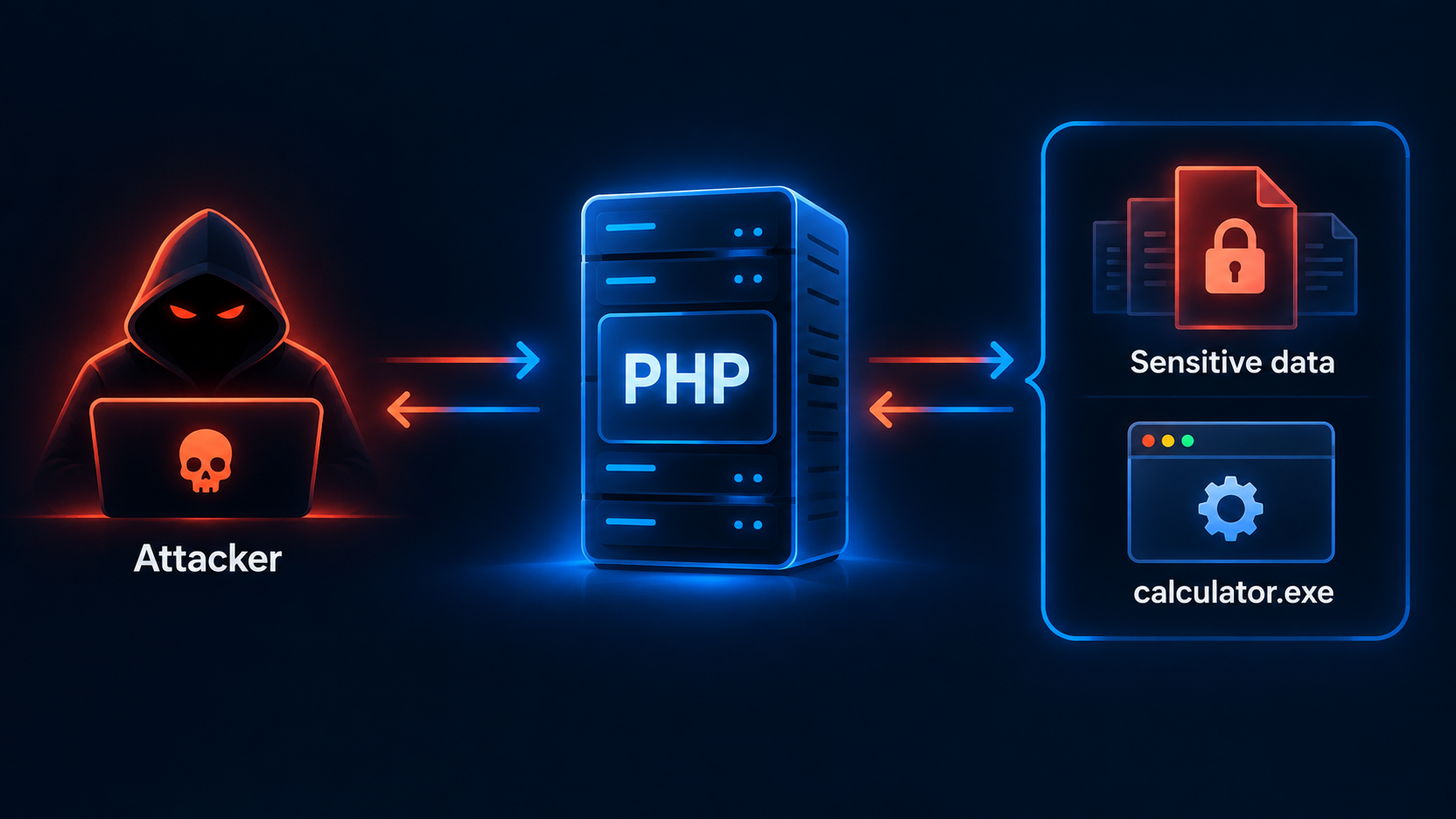
On October 20, the PHP Security Team announced two Critical vulnerabilities and scheduled an emergency security release for October 21, 2026 at 7:00 a.m. PDT (14:00 UTC). Because PHP powers many corporate websites, WordPress blogs and WooCommerce stores, operators should identify their running PHP versions, clarify who is responsible and prepare to apply the appropriate fix once it becomes available.
1. Which websites should pay attention?
PHP is a server-side programming language used in web applications. It can handle account sign-in, contact forms, content management and order processing.
Common PHP-based platforms include WordPress for blogs and business sites; WooCommerce for online stores; Drupal and Magento/Adobe Commerce; and custom-built customer portals, booking systems and administrative websites.
Not every website runs PHP, and using PHP alone does not establish exposure. The actual impact depends on affected versions and technical conditions in the final advisory. With managed software-as-a-service (SaaS) platforms such as Shopify, the provider generally maintains the platform infrastructure. For self-hosted WordPress and custom PHP deployments, confirm who owns server maintenance.
2. How serious are the vulnerabilities?
The PHP Security Team rates both issues 9.2 out of 10 under CVSS v4.0, in the Critical category [1]. CVSS is a standardized framework for assessing technical vulnerability severity and prioritizing remediation.
CERT-EU identifies CVE-2026-109618 and CVE-2026-109619 as potential remote code execution (RCE) issues [2]. RCE can allow an attacker to run unauthorized code on a server when exploitation conditions are met.
At the pre-release announcement stage, PHP had not disclosed full technical details, affected-version ranges or fixed versions. Operators should use the official release guidance to determine exposure and deployable fixes. Japan's IPA has also advised PHP users to prepare for prompt remediation [3].
3. What would RCE mean for a business?
Web servers may process customer accounts, personal information, orders and connections to internal systems. If RCE is exploited, the consequences depend on the server configuration and the permissions of the vulnerable process.
Business risks include unauthorized access to information or configuration, unauthorized changes to website content or data, and interrupted online services. A store unable to take orders may lose revenue; a company website with a broken contact form may miss customer enquiries.
The warning concerns the PHP runtime—the software executing PHP on the server. Updating WordPress, a theme or a plugin does not necessarily update the underlying PHP environment at the hosting layer.
4. What should website owners arrange before release?
For websites built or maintained by outside partners, business owners should coordinate responsibilities with the IT team, web developer, maintenance contractor or hosting provider.
Confirm three things: (1) Which PHP version serves the live production site? (2) Who monitors the security bulletin, determines whether that installation is affected and can deploy the fix—and when? (3) Who will verify sign-in, contact forms, checkout, payments and key integrations after the update?
Prioritize websites handling payments, orders or customer data. A patch should be regarded as complete only after the installed fix and essential business functionality have both been verified.
5. A checklist for IT teams and hosting providers
Preparing the operational steps in advance can reduce delays after the fixed versions are published.
- Inventory production PHP environments: websites, APIs (interfaces connecting systems), PHP-FPM, servers and containers; verify the PHP version actually serving web requests.
- Prepare backups and rollback: preserve data and configuration and document how to restore service if the update causes problems.
- Identify patch channels: upstream PHP, operating-system distributors, Docker images and hosting providers. A backported security fix may not alter the upstream PHP version number.
- Perform smoke tests: quickly check sign-in, forms, checkout, payments and critical integrations after updating.
- Monitor deployments: review access logs, error logs and anomalous activity.
6. What if immediate patching is not possible?
If an appropriate fix is unavailable or deployment needs more time, assess temporary exposure and compensating controls. CERT-EU recommends considering isolation of internet-facing applications where patching cannot be done promptly, taking operational requirements into account [2].
Teams may restrict unnecessary access, increase log monitoring and use a web application firewall (WAF) to filter suspicious web requests. Some functions may need to be temporarily limited after weighing the business impact.
These measures do not replace the official fix. Unsupported PHP branches require confirmation of the vendor's support policy or a plan to move to a maintained release.
7. Website security is an operating responsibility
A company may hire one provider to build its website and another to host it. If maintenance ownership is unclear, critical security updates can be delayed even after an advisory is issued.
Businesses need a repeatable process to identify affected systems, assign responsibility, deploy fixes and verify outcomes. For this PHP alert, the immediate priority is to prepare for the appropriate patch while keeping essential customer-facing services reliable.
Effective maintenance is not only about responding to incidents. It is about being ready to address emerging risks before they disrupt operations.
Sources & further reading
- [1]Upcoming Critical PHP Security Release PHP Security Team · 2026-10-20
- [2]Critical Vulnerabilities in PHP — Advisory 2026-018 CERT-EU · 2026-10-21
- [3]〖事前準備のお願い〗PHPのセキュリティリリース公開予定について IPA (Japan) · 2026-10-21
- [4]WordPress Requirements WordPress.org · truy cập 2026-10-21