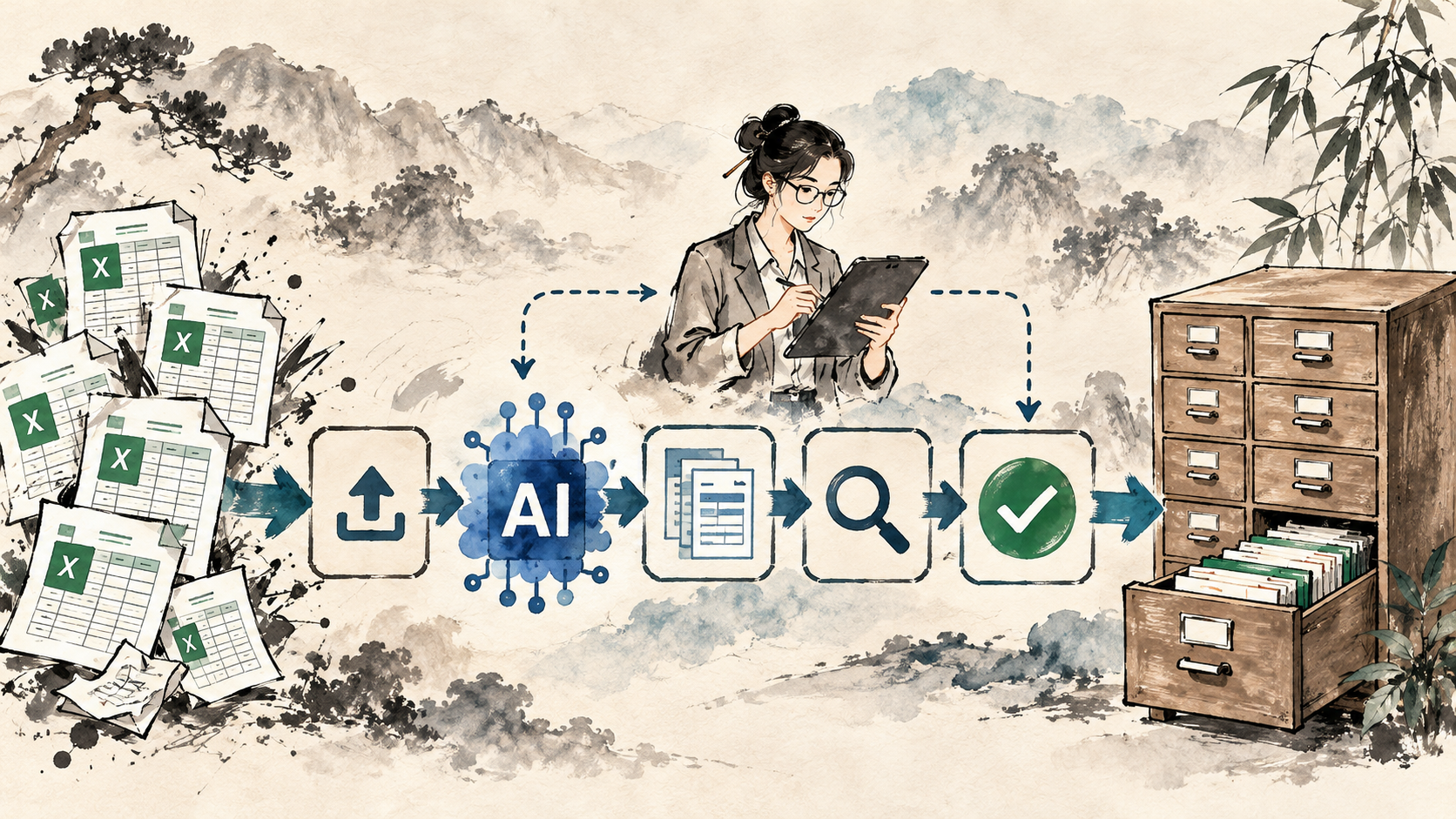

On October 20, 2026, Japan's Digital Agency announced the phased introduction of AI agent environments in its Government AI platform, Gennai. The rollout targets a government workforce of approximately 180,000 and comes with a new governance, security and safety framework known as the Gennai Standards. The important development is not simply the size of the intended audience: it is the attempt to bring task-executing AI into everyday administration without transferring final responsibility away from people. [1]
From answering questions to carrying out workflows
Gennai predates the October announcement. The Digital Agency has been planning a large-scale fiscal 2026 pilot designed to give staff across ministries access to generative AI, identify operational challenges and inform broader adoption from fiscal 2027. The figure of 180,000 describes the target population, not the number of officials proven to be using agents every day. [2][3]
The agency is introducing two environments. Agent Chat, for relatively straightforward agent creation and execution, is being rolled out to ministries starting October 20. Gennai Workshop, intended for more advanced agents, is targeted for introduction around December 2026. The latter remains a plan, not a completed nationwide deployment. [1]
A connected agent differs from a question-answering chatbot because it may search materials, manipulate files and organize a result across multiple steps. Those capabilities can reduce handoffs, but they also make execution permissions and outcome verification part of the core product design.
Separating accountability across three roles
The Gennai Standards distinguish responsibilities for users, administrators and developers. Users are expected to understand limitations and check outputs. Administrators define permitted use, access and incident response. Development and operations teams implement safeguards, evaluation and monitoring. Japan's AI Safety Institute contributed to the framework. [1]
That separation matters for private businesses too. When an agent makes an inappropriate change, a vague assumption that 'AI did it' provides no workable accountability. Teams need to know who authorized the work, who granted access, who reviews high-impact actions and who responds when something goes wrong.
Access control cannot live in prompts alone
Natural-language instructions such as 'do not modify source data' are useful, but they are not the same as technical enforcement. Gennai's governance approach recognizes that broader agent capabilities require safeguards and managed execution environments. The practical rule is to give an agent only the tools and permissions needed for the particular task. [1]
In a government service counter, for example, AI might organize relevant documents and suggest information while an officer verifies the rules and decides what to tell a resident. The announcement does not establish that AI is autonomously approving public applications or issuing official administrative decisions.
For a business, reading documents, drafting a response, sending an email, modifying customer records and authorizing payment should be treated as separate permission levels. An agent assisting an employee should not automatically inherit every capability that employee possesses.
The operational boundary extends to data and tools
Agent risk depends on what data a model can access, which tools it can operate and how those actions are logged. This is why an enterprise review needs to include storage and processing locations, external connections, credential scope, monitoring and human approval points—not model benchmarks alone. [1]
Two systems using the same underlying model can have completely different exposure if one summarizes read-only material while the other runs commands and updates business databases. Controls should be matched to the risk of the executed action.
A practical path for enterprises
Small and midsize companies need not duplicate government-scale infrastructure. A controlled pilot can start with status reports, support-ticket categorization or document preparation. Define the boundaries of autonomous work, require approval for sensitive changes and keep enough evidence to reconstruct actions afterward.
Measure outcomes rather than adoption counts alone: net time saved, error rates, employee rework, exceptions and review effort. Faster execution that produces expensive corrections may not deliver real operational value.
Scaling agents requires an operating model
The Digital Agency plans to release Agent Chat and Gennai Workshop under Gennai OSS version 2.0 around February 2027, with reuse by local governments and private organizations in mind. That is a forward-looking release plan, not an already completed delivery as of October 2026. [1]
Gennai's broader lesson is that more automation and stronger oversight have to develop together. The starting point is not how many tasks AI can perform. It is whether an organization can clearly establish who assigned the task, what the agent was authorized to do, where a person retains judgment and how the result can be checked.
Sources & further reading
- [1]ガバメントAI 源内でのAIエージェント利用環境提供と「源内基準」の公表 デジタル庁 / Digital Agency · 2026-10-20
- [2]ガバメントAI「源内」:計画・導入状況 デジタル庁 / Digital Agency · 2026-10-20
- [3]Launch of Large-Scale Pilot Project of Government AI GENNAI Digital Agency · 2026-03-06