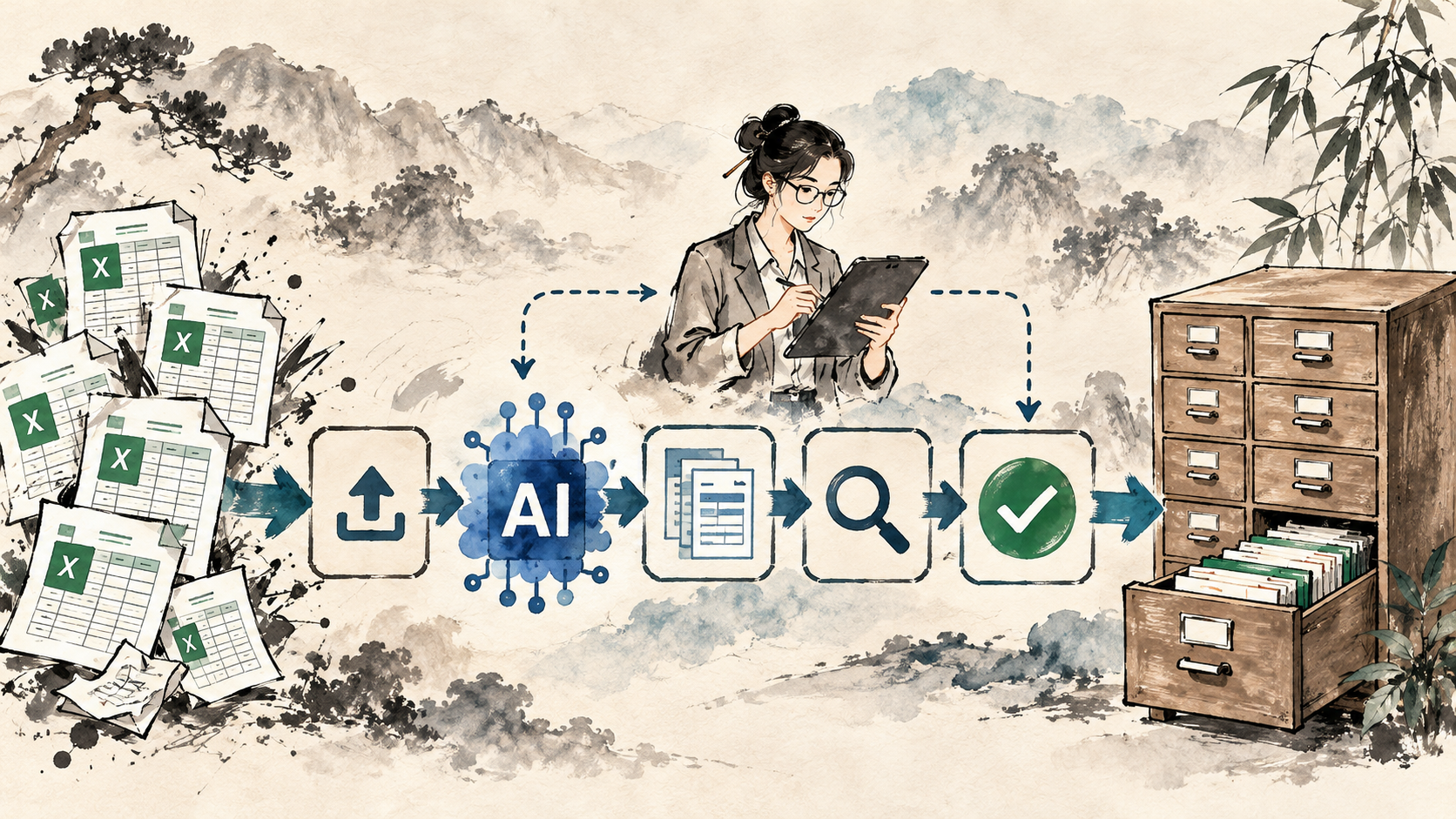

On October 23, 2026, Panasonic Operational Excellence disclosed that personal data concerning roughly 334,000 current and former employees and their relatives had been uploaded to an external generative AI service that the company prohibited. The upload took place during a human-resources information-system implementation project. Panasonic described an internal policy violation, not an external cyberattack, and said it had found no evidence of public exposure or specific damage from misuse at the time of its announcement. The incident illustrates a practical weakness in corporate AI governance: forbidding a service does not, by itself, stop data from leaving the organization. [1][2]
What happened during the HR system project
The project was being carried out by Panasonic Operational Excellence in cooperation with Panasonic Digital. The affected records came from a shared HR system used by group companies in Japan and reflected information registered as of April 2026. [1]
The approximate breakdown was 75,000 current employees, 178,000 former employees, 55,000 relatives of current employees and 26,000 relatives of former employees. Employee records included employee identifiers, addresses, phone numbers and email addresses, but not names. Emergency-contact records for relatives could also contain names. A missing name does not guarantee anonymity: contact details and identifiers may allow a person to be recognized when matched against other information. [1]
Panasonic reported the matter to Japan's Personal Information Protection Commission (PPC) on September 29, before making its October 23 announcement. It did not disclose which AI service was involved, when exactly the upload occurred or what the individual intended to do with it. Those gaps do not support speculation about motives or the full extent of the company's previous technical controls. [1]
A prohibition is not the same as an enforceable boundary
Many companies start their AI governance programs by publishing approved-tool lists, prohibiting sensitive inputs and training staff. Those measures matter, but a written prohibition and the technical ability to prevent or detect a prohibited action are different.
If a worker can export a file from an HR system, open an external AI website and upload it, compliance still depends partly on that person's judgment. In this case, the relevant service had been prohibited, yet the upload occurred. That observation does not show that Panasonic had no technical safeguards; its public statement does not describe every control already in place. [1]
Policies define permitted conduct. Access restrictions, upload controls, logs and monitoring make those rules more enforceable. Data Loss Prevention (DLP) tools, for instance, may help identify and restrict transfers of sensitive information, but their effectiveness depends on classification, coverage and configuration. A sound policy must also give staff an authorized way to complete legitimate work rather than only adding bans that prove impractical.
AI risk also emerges in projects that are not AI projects
This was an HR information-system implementation, not a disclosed effort to develop an AI model. Digital transformation projects regularly involve migration, testing, validation and troubleshooting. Generative AI can be convenient for tasks such as interpreting file structures, but Panasonic has not said what the person involved intended to use the service for.
The broader risk is not confined to AI engineering teams. Information originating in HR, accounting, CRM or e-commerce can move into outside AI services in the course of ordinary work, even where the project itself does not involve AI. In Panasonic's case, former employees and family members registered as emergency contacts were also affected, showing why information stewardship extends beyond current employees. [1]
Project managers should therefore consider data-handling rules when designing the delivery plan: who can export live records, which data is actually needed for testing, which services may process it and whether synthetic or suitably de-identified data can replace real information. These are operational and project-design decisions, not merely tasks for the security department.
Not used for AI training does not mean not retained
After the issue was identified, the team member deleted the relevant AI chat history and related files on their work computer. Panasonic sought clarification from the service provider. According to Panasonic's account of the response, use of uploaded data for model training had been switched off, and the information would not be used in answers to other users. [1]
Even so, material deleted from the user interface was retained by the provider for 30 days for security and compliance, with restricted access. The provider said the retention period for this data would end on October 25, 2026. That was a statement passed to Panasonic before the deadline, not an independent verification that every copy had been permanently deleted on that date. [1]
Three conditions must be separated: excluded from training, removed from a user's history and no longer held in the provider's systems. One does not automatically establish the others. Vendor reviews should cover retention, processing locations, access privileges, deletion and third-party terms in addition to training settings. Japan's PPC has cautioned organizations about entering personal information into generative AI services since June 2023. Its guidance is general; it is not a legal finding against Panasonic in this case. [3]
Practical measures companies can take
The starting point need not be an expensive monitoring platform. First, inventory AI services actually used by employees, and distinguish approved, restricted and prohibited tools. Provide a supported alternative for legitimate tasks so people are not forced to improvise with unreviewed services.
Next, classify information as public, internal, commercially confidential or personal. For testing and analysis, consider synthetic data or information with identifying elements removed appropriately, rather than transferring real personnel records. Review permissions in HR, CRM and finance systems: a right to view information does not always require the right to export an entire dataset.
Depending on sensitivity, organizations can introduce DLP, device and application controls, access logs and alerts while observing employee-privacy and labor requirements. Project managers should agree data rules for development, testing and migration upfront. Any external AI service should undergo provider and contractual review. Teams also need incident procedures covering what data was sent, provider contact, notification obligations and remediation. This risk-based approach is consistent with Japan's AI Business Guidelines version 1.2. [4]
For smaller businesses, clear rules, authorized business AI accounts, limits on the information employees may enter and an accountable owner are realistic first steps. More sophisticated technology can follow the risk.
From an AI policy to verifiable practice
As of its October 23 announcement, Panasonic said it had identified neither public exposure nor concrete harm from misuse. The company planned to review information-management and AI-use rules and strengthen training. Public evidence does not establish which technical defenses it had already deployed, or whether a particular product could have completely prevented the incident. [1]
The narrower lesson is nonetheless important: placing a service on a prohibited list does not guarantee that data cannot be sent to it.
As generative AI enters everyday projects and office work, data protection boundaries extend beyond internal systems to any service employees may use to process information. The strategic choice is not simply between banning and permitting AI. It is to define safe use, enforce proportionate controls, recognize exceptions and verify that policies work in everyday operations.
Sources & further reading
- [1]個人情報を社外の生成AIサービスにアップロードした事案について Panasonic Group · 2026-10-23
- [2]パナソニック、約33.4万人分の個人情報を利用禁止の生成AIにアップロード ITmedia NEWS · 2026-10-23
- [3]生成AIサービスの利用に関する注意喚起等について Personal Information Protection Commission (PPC) · 2023-06-02
- [4]AI事業者ガイドライン 第1.2版 Ministry of Economy, Trade and Industry (METI) · 2026-03-31