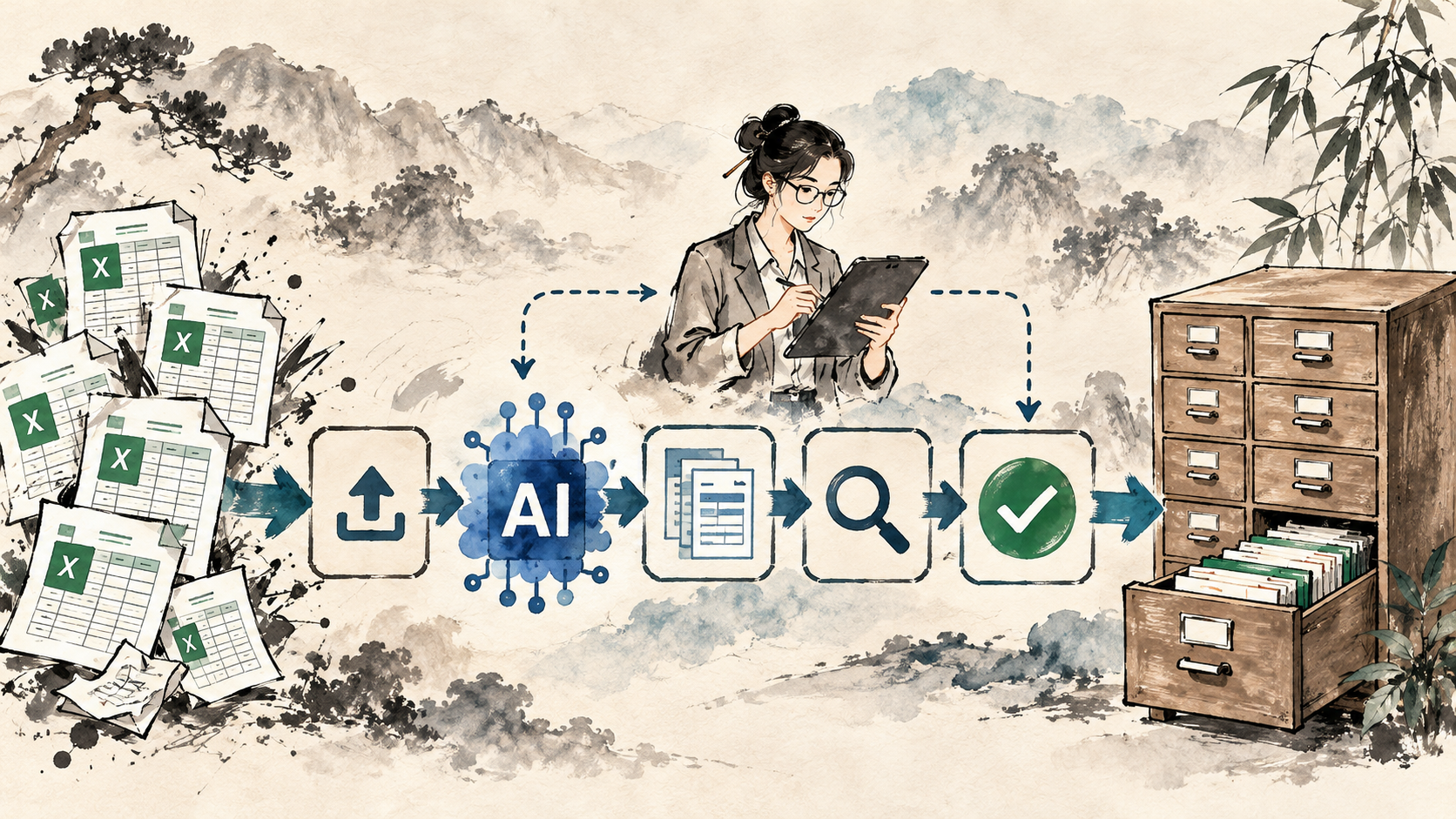

Imagine that your company has invested in a new data platform and dozens of dashboards. Then you discover that employees still download spreadsheets because the new system is slower than the old one. The real question is not why people resist change. It is what the system has failed to solve. Japanese retailer MrMax provides a useful real-world example.
1. A platform went live, but daily work stayed behind
MrMax Holdings, which operates discount stores in Japan, began building a Snowflake data platform in May 2023 and introduced Tableau dashboards. The new platform entered full operation in September 2024, according to a report by DIGITAL X published October 15, 2026 [1].
The initial setup was slow, cumbersome and did not always present the information workers needed. Staff continued to rely on spreadsheets and their own experience. Additional dashboards sometimes recreated old spreadsheet reports rather than simplifying decisions. More workloads led to additional compute spending without solving the underlying problem.
2. What changed during the turnaround
MrMax revisited the design of the environment and changed implementation partners. It examined how the platform was configured, how queries and scheduled jobs ran, and whether unnecessary tables or processes were adding load.
According to the reported company presentation, one data extraction workflow improved from around two hours to a few minutes. Overall display and extraction times decreased by more than 50%, and total platform costs dropped by over 40% [2]. Those figures are different measures and must not be added together. The public report does not constitute an independent audit.
The team also described a store manager who could begin work at 8 a.m. instead of arriving at 7 a.m. just to obtain needed data. That example shows why performance engineering matters to people, not only servers.
3. Three assumptions worth challenging
First, more dashboards are not necessarily more transformation. A new report must help someone decide or act differently; copying an existing spreadsheet into a prettier screen may not achieve that.
Second, buying more processing capacity is not always the answer to a slow system. Configuration, repetitive queries and refresh schedules should be examined before infrastructure is scaled up.
Third, a vendor cannot own the business outcome alone. The customer needs to define acceptance criteria, understand how employees actually work and remain accountable for adoption.
- Ask which decisions become easier, not how many dashboards were delivered.
- Measure performance under realistic workload and data volume.
- Make business teams active partners in implementation.
4. Put the people using the system at the center
Before claiming a rollout is successful, establish what users need to accomplish and how long it currently takes. Test the new system with real work, not only prepared demonstration data. Ensure accurate, up-to-date records are available without forcing employees into manual workarounds.
Measure ongoing costs and gather feedback after launch. A spreadsheet is not the enemy: it remains excellent for quick, exploratory work. The goal is to stop unnecessary copying, errors, rework and delays while keeping the flexibility people actually need.
5. Build reliable foundations before adding AI agents
Once its data platform was improved, MrMax began exploring AI agents for tasks such as demand forecasting, store analysis, buyer reporting and inventory checks. The report also describes internal guidance for responsible use [2].
The order matters. Reliable data and an efficient workflow make automation useful. Adding an agent to an unreliable process will simply automate its weaknesses at greater scale. Digital transformation is not finished on launch day; it becomes real when the new way of working is demonstrably better.
“The best platform is the one that employees can use to make better decisions with less effort.”
Sources & further reading
- [1]ミスターマックスHD、処理速度が遅かったデータ基盤を立て直しAIエージェントの基盤に DIGITAL X / Impress · 2026-10-15
- [2]ミスターマックスHDのデータ基盤改善(続編) DIGITAL X / Impress · 2026-10-15