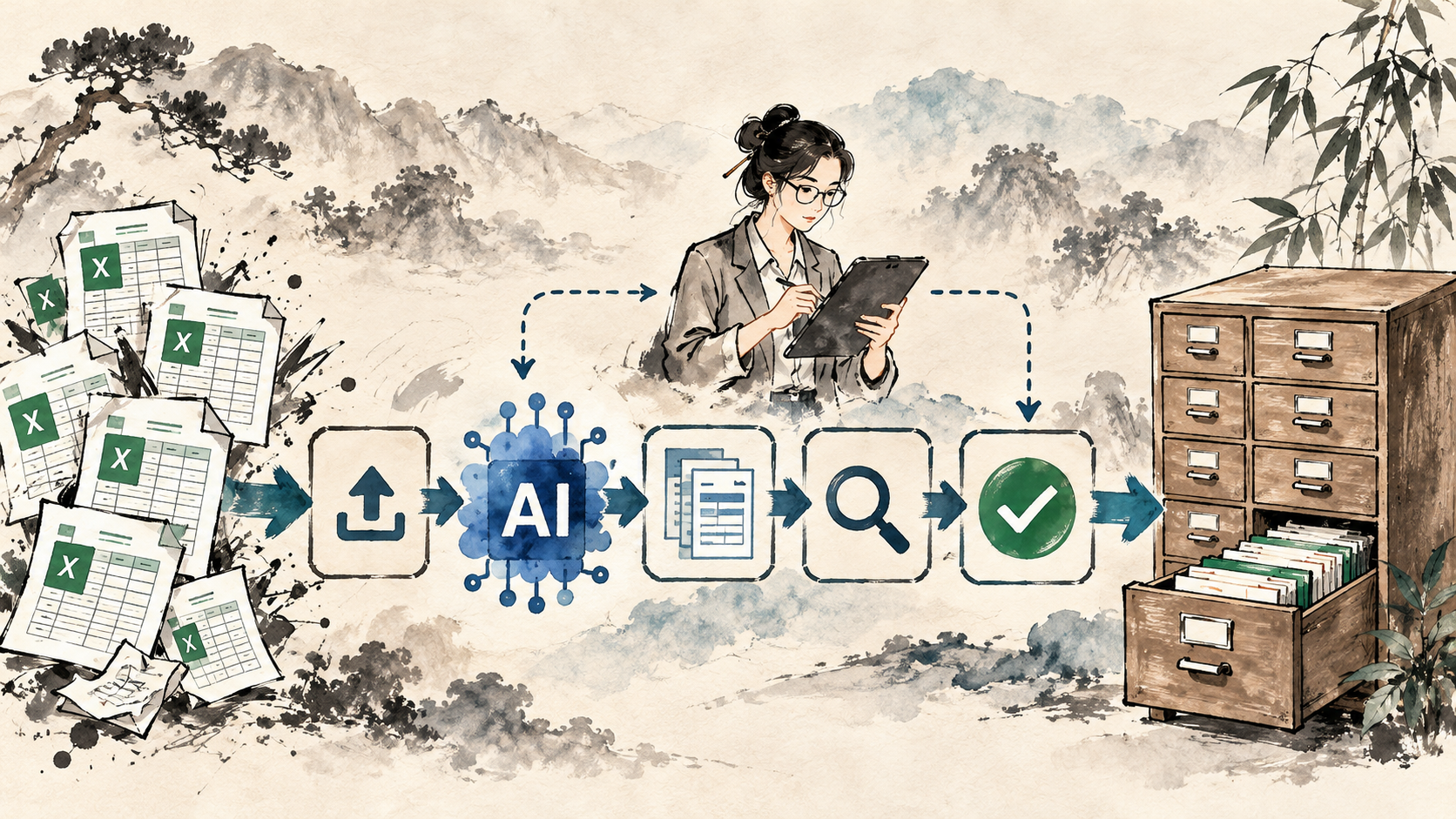

Your team may use AI every day. Customer emails are drafted faster, reports are summarized automatically, and coding assistants are everywhere. But has the customer waited any less? Has your operating cost actually fallen? If the workflow around the AI stays the same, the answer might be no. That difference between tool adoption and business transformation is increasingly important.
1. What the CEO survey actually says
KPMG's U.S. CEO Outlook, published on October 15, 2026, offers a reality check. In its U.S. sample of 400 CEOs, 84% identify AI as a top investment priority for the coming three years [1][2]. Yet only 9% describe the impact of AI agents on their business as transformational. A further 39% report significant improvements in efficiency or growth, and 43% report moderate benefits in targeted use cases.
The survey does not say that the remaining 91% failed or made no money from AI. These categories describe degrees of organizational impact, not audited returns on investment. Many companies report real benefits without having redesigned the entire operating model.
2. Three levels of impact that should not be confused
Adoption means a team has access to AI and uses it. Productivity improvement means specific work becomes faster or better after accounting for checking and corrections. Transformation means the end-to-end process is different: responsibilities, approvals, system integrations and customer outcomes change together.
Consider a support team. An AI assistant that writes email drafts saves a few minutes per request. A redesigned support process could triage requests, retrieve authorized customer data, handle routine cases safely, request approval for exceptions and monitor outcomes. The second changes service capacity and customer experience, not merely drafting speed.
- AI adoption: usage, active users, frequency.
- Productivity: verified processing time, error rates, rework.
- Transformation: end-to-end cycle time, customer value, cost per completed case.
3. Why pilots often stop short
A local gain does not necessarily improve the whole workflow. If AI drafts a report in five minutes but that report still waits two days for approval, the bottleneck has barely moved. Another frequent mistake is to count tool-license fees but ignore setup, data preparation, integration, human oversight, security, operations and change management.
Data quality, integration and governance belong in the business case. An agent without reliable access to authorized records becomes another disconnected tool. An agent with too much authority creates risk. The best design makes permissions, escalation and auditability explicit.
- Measure the completed business process, not just model output.
- Account for total incremental costs and human review.
- Give each workflow an accountable business owner.
4. A practical way to calculate value
Start with a baseline: how many cases arrive, how long they take end to end, how often they require rework, and what the total costs are. After deployment, compare the same measurements while including the operating cost of the AI system.
A useful expression is: net AI value = verified business benefits minus total incremental AI costs. For example, if a workflow completes 10,000 cases a month and verified end-to-end handling time falls by two minutes per case, roughly 333 staff-hours of capacity have been released. That is not automatically 333 hours of payroll savings. The company must determine whether the capacity reduces cost, improves service, or enables more valuable work.
- Efficiency: time and cost per resolved case.
- Quality: accuracy, rework, satisfaction.
- Growth: capacity, conversion, retention.
- Risk: exception handling, compliance and reliability.
5. Redesign the work, not just the tools
Choose one friction-heavy workflow with a measurable business owner. Set a baseline before adding AI. Redesign the steps, clarify what people approve, and connect the data and operational systems safely. Then measure outcomes after launch—not only in a controlled demo.
The most valuable AI initiative may not be the one with the most prompts, agents or integrations. It may be the one that quietly eliminates a needless handoff and lets a customer reach a better outcome sooner. That is the difference between demonstrating AI and transforming a business.
“Real transformation starts when AI becomes part of a redesigned, measurable and accountable way of working.”
Sources & further reading
- [1]KPMG Survey: CEOs Confident in Their AI Progress and U.S. Economic Growth, but Cyber and Geopolitical Risks Intensify KPMG LLP · 2026-10-15
- [2]2026 U.S. CEO Outlook KPMG · 2026-10-15